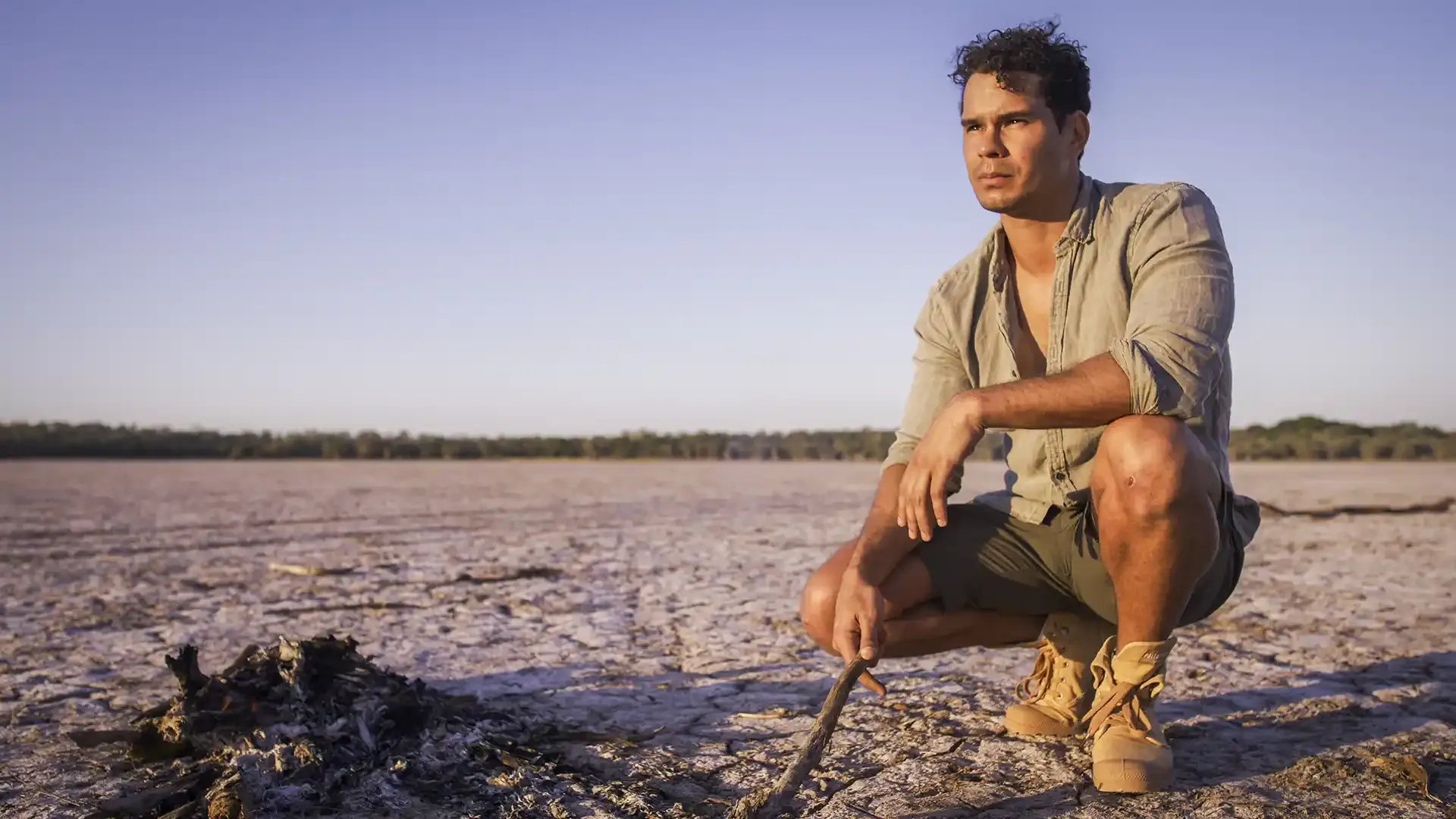
Animal lovers and admirers of the natural world, discover the remarkable creatures living in a land that defies time in the remote northwest of Australia. This near-pristine corner of the world is home to hundreds of amazing plant and animal species found nowhere else on earth. Get to know some of our planet’s most unique wildlife found in this extraordinary destination.
Watch “The Kimberley: Australia’s Wild West” for even more exciting adventures. And check out our collection of gifs of the Kimberley’s most incredible animal residents!
Add to your watchlistThe Kimberley (Country)
A unique and rugged landscape in northwestern Australia, “The Kimberley” is a tropical wilderness that spans over 150,000 square miles, an area almost the size of California. With an extreme climate, harsh terrain, and remarkable biodiversity, it is home to the most intact savannah ecosystem on the planet where the discovery of new species happens regularly.
The Kimberley is also home to the oldest living culture on Earth. For First Nations people, this land is a living, breathing entity called Country, and they’ve been caring for it for over 50,000 years.
Facing a variety of threats, this area is now the front line of biodiversity conservation, where Traditional Owners and ecologists are working together to save the precious creatures who make their home in the Kimberley.
Frill-Necked Lizards (Koolamana)
The koolamana, or frill-necked lizard, is an iconic resident of the Kimberley who is a skilled climber and an expert of camouflage that knows Country well. During breeding season, males show off with fancy collar flexes to find a mate, and are known to fiercely battle to defend their turf.
Female frillnecks explore dozens of nesting sites, digging holes and using their snouts to test soil temperatures before laying 8-14 eggs eight inches underground. Dad flees after mating and Mom is close behind, abandoning her eggs after tucking them comfortably into the nest.
Baby koolamanas hatch after 10 weeks, and within an hour of leaving the egg, they can run, hunt, and even practice the cheeky frills they got from dad. They hang out with their siblings for around 10 days until instinct kicks in and they venture out to spend most of the rest of their lives alone.
Mudskippers (Buggle Buggle)
Alien-like creatures called buggle buggle in the First Nations language, or mudskippers, are a fish unlike any other. Mudskippers aren’t confined to water, as long as they stay hydrated.
As though that isn’t sensational enough, to attract a female fish, male mudskippers morph into fantastical performers and put on a show. They change their brown body color to iridescent dark green, sometimes adding brightly colored spots, then arch and raise their fins along with completing energetic movements.
With frog-like eyes that move independently, they can keep watch in multiple directions at once, a fitting ability for creatures known to be territorial. It’s not uncommon for these superfluous fish to face-off against one another with gaping mouths and raised dorsal fins, aggressively leaping towards each other, sometimes even emitting a rallying cry!
Support your local PBS station in our mission to inspire, enrich, and educate.
Savanna Glider (Langkurmannya)
The nocturnal savanna glider gets around the woodland with ease, using a membrane extending from wrist to ankle to glide up to one-hundred-fifty feet between trees.
Living in social clans of seven to 10 adults and their young, gliders share a nest in tree hollows formed over hundreds of years. While playful within their unit, they can become aggressive and noisy when feeling threatened. Gliders are a vocal bunch with a range of barking, yapping, screaming, buzzing, and hissing noises used to deter predators and communicate within their colony.
Once thought to be a sugar glider, research over the past decades revealed that savanna gliders are genetically and physically distinct. Knowledge shared from First Nations people helped identify these culturally significant creatures called langkurmannya in the Dambi language.
Blue Ringed Octopus
These eight-footed mollusks, like all octopus species, are highly developed, with remarkable brains and excellent sight.
Typically less than five inches long, the blue-ringed octopus is skilled at camouflaging themselves with brown, yellow, and gray bodies. Despite being relatively common, these solitary vanishing acts are rarely seen as they remain hidden in plain sight!
When turning a rock in the shallows or upending a dead shell, watch for rapidly glowing blue rings, which are the telltale warning display of the deadly blue ringed octopus before it strikes. One of the world’s most venomous creatures, their sting can be fatal as it carries enough toxins to kill up to 10 humans.
Their bite does not cause pain and often will not leave a puncture mark, but people with numbness or difficulty seeing and speaking require urgent medical attention.
Jacana
A peculiar waterbird, the jacana has never-ending legs and exceptionally long toes that distribute its body weight across floating vegetation, often appearing as if it’s walking on water.
The male jacana builds the nest, and once the female has laid her eggs she abandons the crew. Meanwhile, dad incubates the eggs — dutifully retrieving any that accidentally roll into the water — and then raises the young, teaching them everything he knows.
Left with little ones whose growing wings aren’t ready for flight, the male may call the babies under his wings to hide quietly, or even fly baby chicks to safety at the threat of danger from predators lurking both below the water and high above.
Young birds are even known to dive underwater for protection and stay submerged for extended periods with just their nostrils poking out.
Osprey
Powerful raptors that live on the rocky coastlines of Australia, eastern osprey may also be called sea hawk, river hawk, or fish hawk, with no distinguishable Aboriginal name found in the Kimberley region. These particular birds of prey are not migratory and represent the smallest subspecies of osprey, which are found nearly worldwide.
Unique adaptations suit the osprey lifestyle, such as reversible outer toes and backward-facing scales on the talons for easily grabbing fish, and closeable nostrils for keeping water out while diving.
Typically mating for life, female eastern osprey lay two to four eggs and are the primary brooder for 30 days, while males transport live fish meals and keep guard from nearby perches. After hatching, chicks require up to six meals a day, but all that competition for limited food resources means many young ospreys do not survive to adulthood.
Nabarlek
At only three pounds and 12 inches long, the silky-furred nabarlek is Australia’s smallest rock wallaby. These mysterious creatures are found on only a few of the Kimberley’s remote islands and small coastal pockets on the mainland, and they appear to be on the verge of extinction based on recent findings.
Typically living in rugged rocky areas, they may venture hundreds of feet into the plains to feed on grasses and ferns. The nocturnal narbarlek tends to be both secretive and difficult to distinguish from the monjon, though their habit of hopping with their fluffy tail arched above their body is distinct.
The easiest way for scientists to track their presence is by testing scat for nabarlek DNA!
Northern Quoll (Wijingarri)
The wijingarri, or northern quoll, is a central figure in the Dambi people’s creation stories and one of their most sacred animals.
These two-and-a-half pound marsupials have a stunning appearance, with white spots along their back and a long unspotted tail that can reach up to 14 inches. Expert night-hunters, the agile wijingarri use the short “thumb” on their hindfeet to grip the rocky terrain to feast on insects and occasionally small birds, reptiles, or mammals.
Once common across Northern Australia, northern quolls now face extinction due to predators, habitat loss, and the recent invasion of toxic cane toads, which the wijingarri mistake for prey, causing lethal population declines.
Hope remains for a few northern quolls surviving on coastal islands for the past nearly 10,000 years, protected by the surrounding ocean since sea levels rose.
Humpback Whales (Mundumbun)
Woven into the creation stories of the Worrorra people, humpback whales, known as mundumbun, are a respected species in these waters.
Arriving at their foraging grounds off the coast of the Kimberley after traveling over 3,000 miles from Antarctica, they breed and raise their babies from June to November. Estimates place this population of annual visitors at over 30,000 whales, and they are believed to be one of the largest breeding groups of humpbacks in the world.
Known for their haunting melodies, humpbacks are social whales that use their vocalizations to communicate. Mothers and calves have quiet conversations emitted at a lower amplitude, preventing detection of the vulnerable young to predators or larger male tormentors.
The humpbacks “code” their communications in other ways, by changing the type of signal used, its acoustic level or duration, as well as how frequently the signal is produced.
Monjon
The adorable little monjon, or Burbidge’s rock-wallaby, lives in the roughest landscape of the Kimberley. Only 12 inches high with a 14-inch tail, they’re quick and perfectly adapted to the rugged caves and sandstone around them. Their rough-soled back feet help them grip the slippery rock and propel themselves forward.
Discovered in 1976, this elusive creature is quite shy and quick to retreat when approached. They are nocturnal marsupials who weigh around two-and-a-half pounds when fully grown.
Females are pregnant roughly 30 days with one little hairless joey, who remains tucked within mom’s pouch for another nine months.
Rough Scaled Python
One of the rarest snakes in Australia, the rough-scaled python is found only in the Kimberley region and was formally identified in 1981.
Dark brown with paler uneven patches along its body, the rough-scaled python can grow up to six feet long. Ridged scales help them grip onto rocky surfaces as they silently climb amongst rock ledges and crevices. With the longest teeth of any snake relative to their body size, they capture their prey and easily penetrate through the deep fur and feathers of rats and pigeons.
Typically mating during July and August, females lay 10 eggs and coil around them for warmth until the little pythons hatch. Like most egg-laying reptiles, the female leaves the nest after hatching and the young are left to fend for themselves.
More to Discover
With so many incredible creatures, it’s hard to believe there are even more species to discover within the remote tropical wilderness of Australia’s Kimberley. Alongside turquoise coastlines, spectacular gorges, waterfalls, and sandy deserts lie unique hidden treasures throughout this rugged landscape.
Watch “The Kimberley: Australia’s Wild West” for even more exciting adventures!
The PBS ‘What to Watch’ Weekly Newsletter
What to Watch delivers the best shows and content PBS has to offer each week.