My guess is that most viewers of this episode had never heard the word lithopedion prior to watching. The term lithopedion, as also defined by the surgeon in the episode, comes from the Ancient Greek meaning “stone” and “small child,” often referred to in the literature as a “stone baby.”
This was not a phenomenon created by the show’s writers (although kudos to them for incorporating such an interesting topic into the storyline!). How could this happen physiologically, you are asking? In rare instances, an embryo can implant not where it should (inside the uterus) but implants on an organ in the maternal abdomen instead.
While a fetus can grow to term outside of the uterus (and in the maternal abdomen), it is more likely it will die at some point, and the woman’s body would then absorb the tissue.
In the case of the lithopedion, however, the fetus becomes calcified and hardens (hence the “stone baby” term). This calcification occurs as part of the body’s protective response to wall off the fetal tissue and protect the mother from infection or other complications.
What is even more astonishing about this rare occurrence is that a woman could live her entire life and this never be detected, if the pregnancy ended at an early gestation. It can happen all the way to full term, but there would be far less likelihood that it would go undetected. Usually when it is discovered, it is an incidental finding in the diagnosis or treatment of some other condition.
Women can even have a lithopedion in their body, conceive again, and give birth to the subsequent baby without detection of the lithopedion. In my career, I have never seen a case.
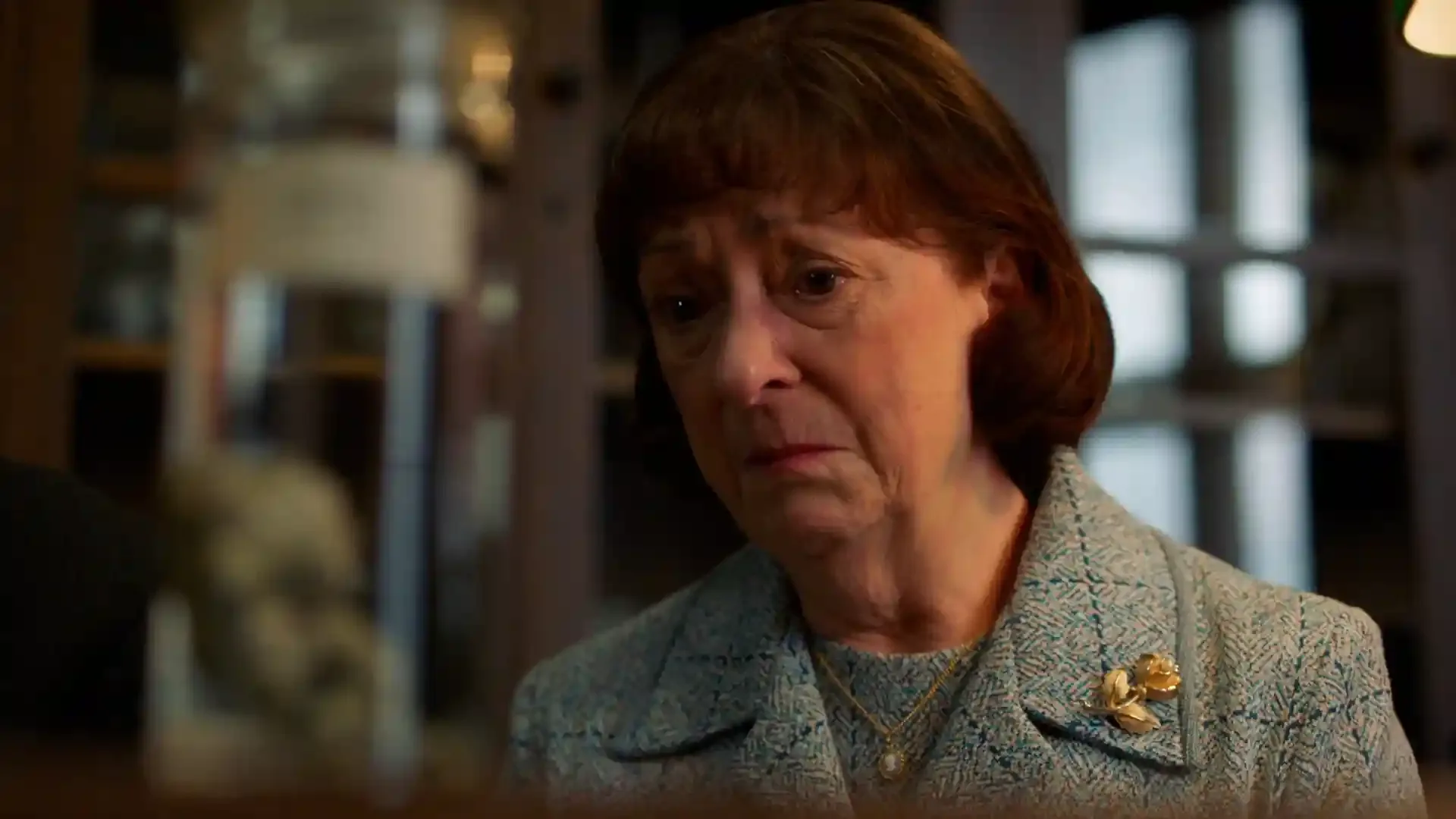
What added to the sadness around this storyline, for the older couple who had wanted children but were unable to have any, was their treatment by the medical establishment. When the surgeon came into the room with his medical students and asked if the “monster” was available to view, within earshot of the woman from whom it was removed, it made me catch my breath.
Now, to be fair, the term “monster” was well established in the medical literature of the time to describe babies who had severely disfiguring birth defects. It derives from ancient times when very disfigured fetuses were believed to have been the result of curses, witchcraft, or dealt as some sort of godly punishment to the woman bearing the child for past transgressions.
Medical texts even used this very terminology. Thankfully, the terminology has been replaced with more descriptive and specific terms for the abnormalities that are noted in fetuses.
Still, this brings me to a point I find myself often discussing with students, which is that the way in which we speak to patients, and the very words that we use in our discussions with them, matter so much more than we know. One common example is how we track the pregnancies a woman has had, how many term and preterm pregnancies she has had, and any pregnancy losses.
All pregnancy losses prior to 20 weeks of pregnancy are technically classified as “abortions,” which is a word that can trigger a spectrum of emotions. Some women may have “elective” abortions, meaning that they choose to terminate a pregnancy. Other women have “spontaneous” abortions (often referred to as “miscarriages”).
There are other categories of pregnancy loss under the umbrella term of “abortion,” so it should make sense that we would be sensitive with the words that we choose when discussing this area of pregnancy classification with patients.
As clinicians and caregivers, how we say something matters as much as what we say.